
Getting MEP Right
from RIBA Stage 1
How Early Engineering Intelligence Drives Profit,
Programme Certainty and Design Efficiency

Executive Summary
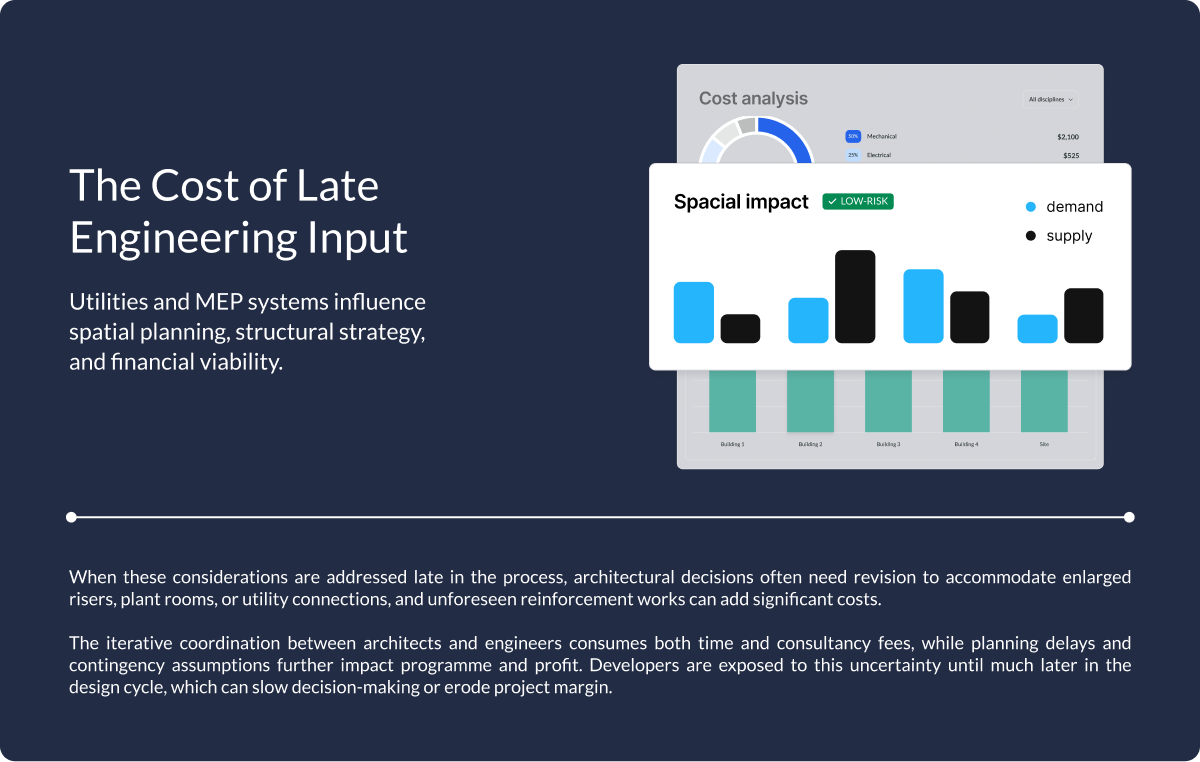
Mechanical, Electrical, and Plumbing (MEP) systems are central to every building’s viability, yet engineering input often arrives too late. Architectural layouts are typically advanced, appraisals tested, and land positions secured before detailed MEP assessment occurs. This delay introduces friction: redesign cycles, unexpected utility upgrades, loss of NIA, and planning delays. Digital engineering tools now make it possible to define critical MEP parameters from RIBA Stage 1 and update them dynamically as the design evolves. Early MEP input protects margins, reduces risk, and strengthens both design and programme outcomes.

Engineering Intelligence from RIBA Stage 1
Using the latest digital tools, MEP plant rooms and risers can be established earlier than traditionally possible. Even substation requirements and sustainability compliance can be incorporated into early-stage outputs.
As architectural designs progress, these parameters can be updated, giving architects clear servicing constraints from the outset. Rather than reacting to constraints after layouts are fixed, design teams work proactively, aligning architectural intent with engineering requirements from the very beginning. Developers gain early visibility on feasibility, risks, and potential costs, which strengthens decision-making and appraisal accuracy.
Benefits for Developers and Architects
Early-stage MEP advice drives measurable value:

For developers:
improved feasibility confidence, early identification of risks, and more predictable costs; faster planning approvals; reduced redesign and contingency allowances.
For architects:
fewer coordination cycles, preserved design intent, and integration of fire, structural, and energy strategies without compromise.

How Neuron Supports Early-Stage Engineering
Neuron is an MEP engineering practice and digital platform that embeds engineering intelligence into early-stage development.
Key benefits include:
- Early certainty on infrastructure feasibility and risk
- Capacity gap analysis across power, water, drainage, and communications
- Strategic connection options for efficient design and planning
- Transparent, auditable outputs that evolve with the design
By providing insight from RIBA Stage 1, Neuron helps developers and architects make faster, more informed decisions, reduce redesign cycles, and progress projects with confidence.

About Neuron
Neuron provides early-stage MEP strategy and Utility Impact Reporting for residential and mixed-use developments across the UK and Australia. By combining engineering expertise with structured digital delivery, Neuron enables developers and architects to make faster, more informed decisions from concept through planning.